

Address:92 Xidazhi Street, Nangang District, Harbin
Zipcode:150001
Tel: 0451-86413408
Email:qqzhang@hit.edu.cn
Focusing on national strategic development, SEIE has formed an excellent education tradition. It has built a world-class discipline of Information and Communication Engineering, and cultivated high-level innovative talents in electronic information relying on a first-class scientific research environment. In the new era, facing the new mission of education, based on the new development stage and implementing the new development concept, the college takes Double First-Class construction as the lead. It improves the integrated undergraduate and graduate outstanding talent training system, explores the interdisciplinary talent training mechanism, and cultivates outstanding talents who can lead the development of electronic information and related fields in the future.
Historical Evolution of the College's Professional Development
1959: Established the Department of Radio Engineering, offering three five-year undergraduate programs: Communication, Television, and Electron Tube.
1962: The Department of Radio Engineering set up two programs: Radar and Communication.
1977: Began enrolling undergraduates in Communication System Engineering, Information Engineering, and Radio Technology.
1996: The Department of Radio Engineering was renamed the Department of Electronic and Communication Engineering, enrolling undergraduates in Communication Engineering, Electronic Information Engineering, Applied Electronic Technology, and Microwave Technology.
2004: Officially enrolled students in Communication Engineering (Microwave Technology Direction).
2007: Established the undergraduate program of Information Countermeasure Technology.
2008: Established the undergraduate program of Remote Sensing Science and Technology.
2009: Established the undergraduate program of Electromagnetic Field and Wireless Technology.
2020: Established the undergraduate program of Intelligent Measurement and Control Engineering.
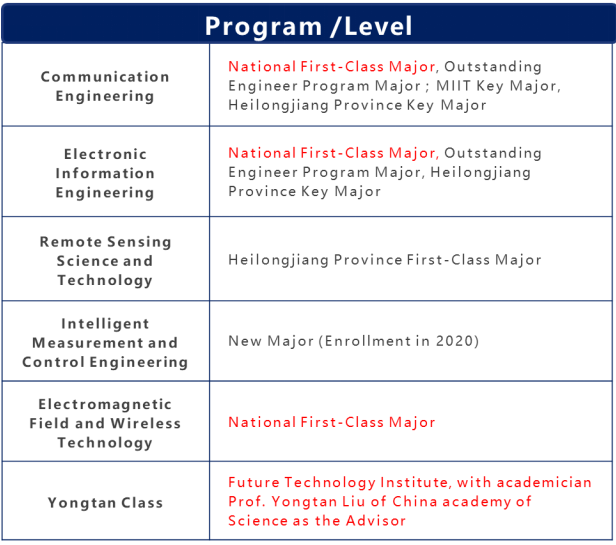
Currently, the college has one first-level discipline (Information and Communication Engineering), one second-level discipline (Electromagnetic Field and Microwave Technology), six undergraduate programs (Communication Engineering, Electronic Information Engineering, Information Countermeasure Technology, Remote Sensing Science and Technology, Electromagnetic Field and Wireless Technology, Intelligent Measurement and Control Engineering), and one new minor program (Intelligent Information Engineering).
Based on the discipline's own scientific research advantages, the college actively builds Golden Majors, Golden Teachers, Golden Courses, and Golden Textbooks. It cultivates a high-level teaching team, improves the talent training model, deepens supply-side structural reform, and comprehensively enhances professional connotation and talent training quality. The college now has 6 national first-class undergraduate courses and 1 provincial excellent graduate course; 2 provincial Distinguished Teachers, 1 national teaching team, and 3 provincial teaching teams. Since the 12th Five-Year Plan, it has published more than 70 textbooks, monographs, and translations. It has won 4 second prizes of national textbook construction, 4 provincial textbook construction awards, 4 textbooks approved for the 14th Five-Year Plan of the Ministry of Industry and Information Technology, and 4 new-form textbooks.
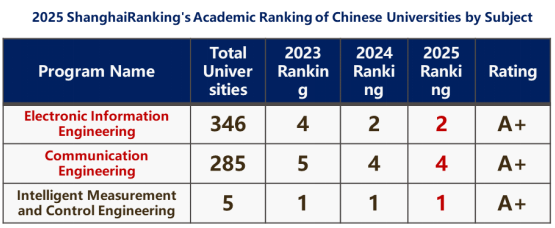
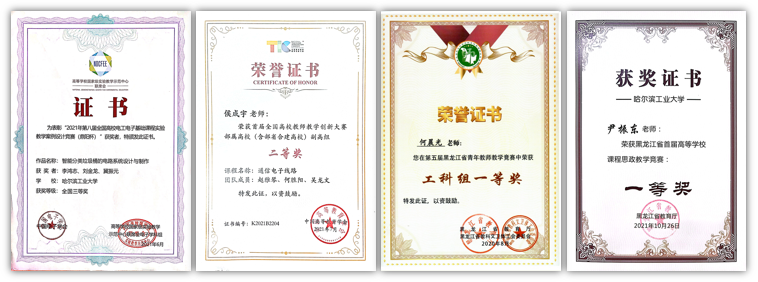
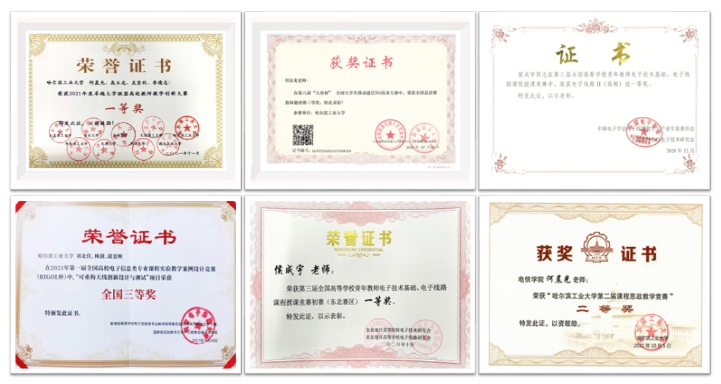
The college implements the new development concept, takes Double First-Class construction as the lead, vigorously promotes education and teaching reform, strives to cultivate high-level teaching achievements, and promotes high-quality teaching development. In 2022, the college's undergraduate teaching evaluation ranked second in the university. In the past five years, it has won 37 awards in national teaching competitions and 23 awards in provincial and ministerial teaching competitions.
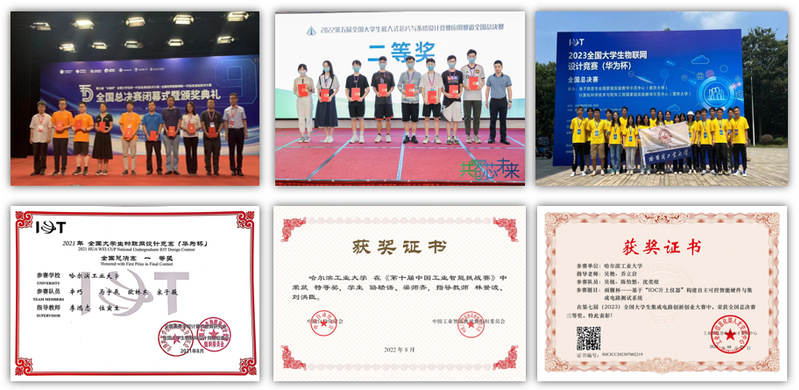
Adhering to the people-oriented education concept, the college strengthens the dominant position of students. It organizes students to carry out scientific and technological innovation activities through multiple channels, levels, and all directions. Students have achieved excellent results in many national and provincial-level competitions such as the Internet Plus College Student Innovation and Entrepreneurship Competition, Challenge Cup National College Student Extracurricular Academic and Technological Works Competition, Datang Cup National College Student Communication Technology Competition, National University Student Internet of Things Design Competition, Embedded Chip and System Design Competition, as well as national college student mathematics, English, and physics competitions.