Address:92 Xidazhi Street, Nangang District, Harbin
Zipcode:150001
Tel: 0451-86413408
Email:qqzhang@hit.edu.cn
|
 76
76
|
Professor Lin Lianlei's Team from SEIE Proposes Novel Intelligent Forecasting Method for Low-Altitude Short-Term Wind Fields, Providing Strong Support for Smart Wind Power and Low-Altitude Economy
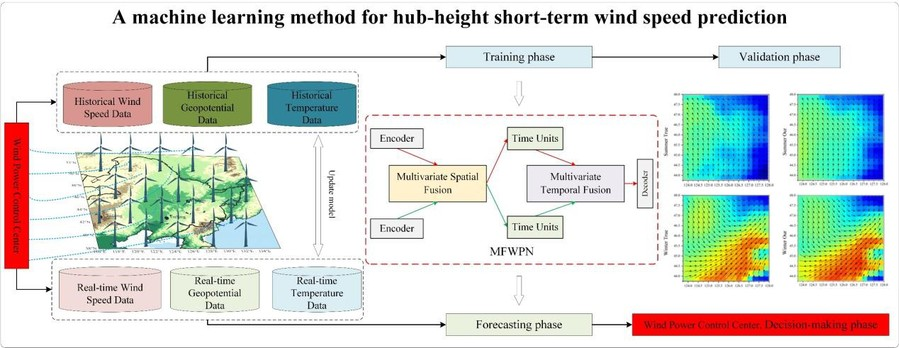
Recently, Professor Lin Lianlei's team from SEIE has made significant research progress in the field of intelligent wind speed prediction. They innovatively constructed a Multivariate-data Fusion Wind Prediction Network (MFWPN), achieving high-precision intelligent forecasting of low-altitude short-term wind fields. The findings, titled A machine learning model for hub-height short-term wind speed prediction, have been published in the prestigious journal Nature Communications. This outcome can support the development of smart wind power and ensure the flight safety of low-altitude aircraft .
As a clean energy source, wind power plays a crucial role in the future energy structure. However, the randomness of wind energy and its inability to be stored lead to uncertainties in wind power supply. Furthermore, in the low-altitude economy, strong convection and complex meteorological conditions in low-altitude airspace pose serious threats to the safety of low-altitude aircraft. Therefore, accurate short-term wind speed prediction is vital for the scheduling, operation, and maintenance of wind power, as well as for ensuring the safety of low-altitude aircraft .
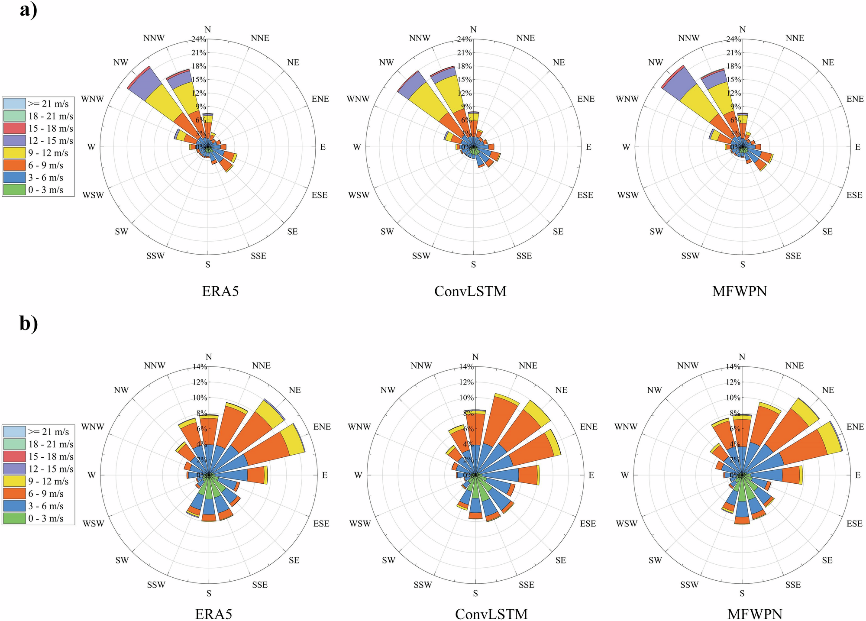
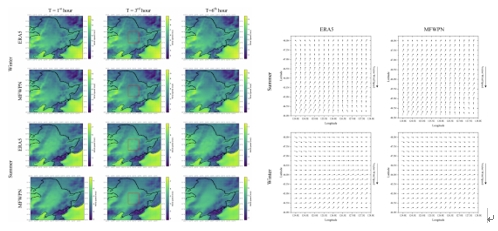
To address these challenges, Professor Lin's team proposed the MFWPN to achieve a new method for fine-grid vector wind speed prediction. The study employs a CNN-Transformer architecture to extract spatiotemporal features of wind speed and uses a spatiotemporal fusion module to integrate multivariate meteorological information. Results demonstrate that within the first 6 hours, the MFWPN outperforms the European Centre for Medium-Range Weather Forecasts model in vector wind speed prediction accuracy. Transfer experiments confirm the model's strong generalization capability, enabling rapid application to wind speed prediction in different regions. Efficiency tests show that the MFWPN requires only 18 milliseconds to predict 24-hour fine-grid vector wind speeds in Northeast China. With its accuracy and efficiency, the MFWPN can serve as an effective tool for vector wind speed prediction, supporting ultra-short-term and short-term deployment planning for wind power centers and providing robust support for route planning of low-altitude aircraft .
Harbin Institute of Technology is the primary affiliated institution for this research. Professor Lin Lianlei is the corresponding author, and doctoral student Zhang Zongwei from the School of Electronics and Information Engineering is the first author. Doctoral students Gao Sheng, Wang Junkai, Zhao Hanqing, and Yu Hangyi also contributed to the research. The study was supported by the National Key Laboratory Fund and other projects .
Link to the paper:
https://doi.org/10.1038/s41467-025-58456-4